
A good long read from Henry Oliver in The Works in Progress, about how English has become easier to read:
‘A sentence should not have more than ten or twelve words.’ VS Naipaul’s first rule for good writing is a popular one. From Hemingway’s legion of admirers, to Grammarly, to countless books and internet memes about writing well, the idea that shorter sentences are better is dominant. Many people go further, arguing that one of the most important changes in English over time is its sentences getting shorter.
This has been a standard modern academic account of English prose, from Edwin H Lewis’s 1894 book The History of the English Paragraph to recent dataset analyses. Arjun Panickssery recently argued that English sentences got shorter over time and that‘shorter sentences reflect better writing’.
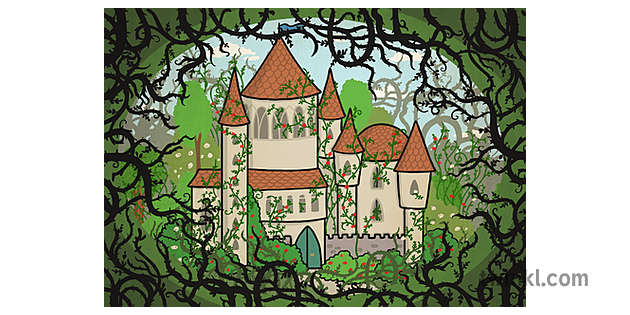
The Elizabethans and Victorians wrote long tangled sentences that resembled the briars growing underneath Sleeping Beauty’s tower. Today we write like Hemingway. Short. Sharp. Readable. Pick up an old book and the sentences roll on. Go to the office, read the paper, or scroll Twitter and they do not. So it is said. I would like to suggest that this account is incomplete.
I propose a different story.
Instead of making it about sentence length, Oliver argues that English writing has become easier to read over time due to the emergence of specific styles of writing. Older writing, especially in Old English, tended toward rhythmic, periodic clauses and a strong dependence on metaphor and repetition; whereas more modern writing depends more on syntax and clear sentence structure. More modern sentences aren’t necessarily shorter, but their structure is clearer.
He also discusses the emergence over time of a style that more directly mimics speech. This is really noticeable in recent writing, especially on the Internet, but also appears in literature like the opening to Bleak House:
London. Michaelmas term lately over, and the Lord Chancellor sitting in Lincoln’s Inn Hall. Implacable November weather.
And also calls out C.S. Lewis as a writer who used this style well:
Helen de Witt gave a perfect example of this point recently, when she mentioned that she had, as a graduate heading to Oxford, read Samuel Johnson, thinking that was how English people wrote. After arriving she was instead advised to read CS Lewis to improve her prose style. Johnson has a writerly style. Lewis always sounds like he is talking to you. No-one could think that Addison or Carlyle’s books (even his lectures) were just dictation, caught by someone overhearing them, but you might believe that about CS Lewis, whose work often reads like a transcript of a radio broadcast.
Anyway, you should read the article. It makes good arguments, including not just examples but by using statistics on sentence structure over time, and is just an excellent read. (It certainly entertained me this morning, after the puppy woke me up at 5am and wouldn’t go back to sleep without being cuddled for a while…)